Categories

All Categories

Browse all categories to find the products you want to compare

B2B Procurement Category Comparison: Data-Driven Decisions Over Guesswork

📖 Learn more about our comparison methodology (click to expand)

在全球化采购时代,跨境B2B买家面临的核心挑战不是「找不到供应商」,而是「无法高效验证和对比供应商」。同一个品类下——无论是LED灯具、Gift Packaging还是3C配件——中国市场上可能有数千家工厂在报价,参数标注方式各异,认证标准不统一,价格波动剧烈。Compare2Best All Categories正是为解决这一问题而构建:我们按行业将可对比产品分门别类,让你在熟悉的品类入口下,快速找到经过数据核验的品牌与产品。

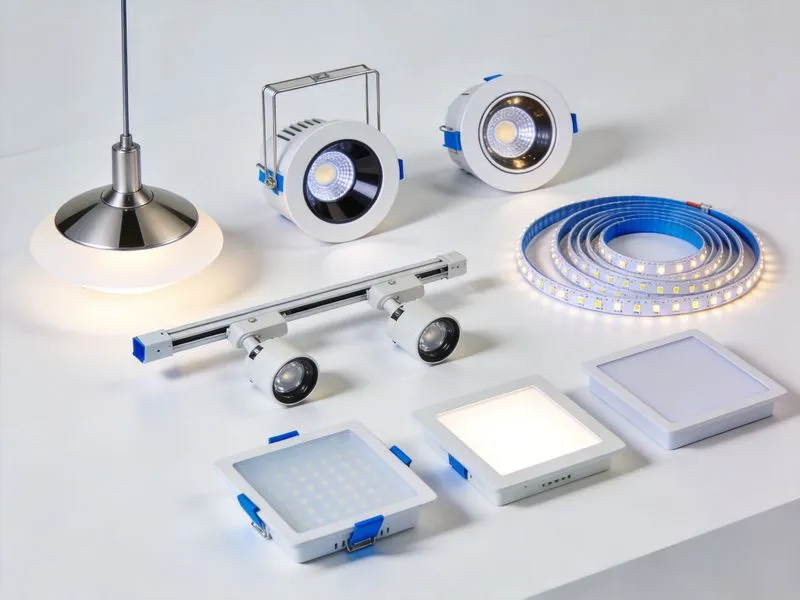
目前平台已覆盖 Lighting & Lamps(LED灯具、Commercial、Industrial等10+子类)和 Gift Packaging(Gift Box、礼品袋、丝带、包装纸等),Furniture3C & AccessoriesHome AppliancesHome & Kitchen等品类正在Coming Soon,即将上线。

品类对比流程非常简单:Select category → Browse brand list → Check 2-4 target brands → Click Compare → System auto-generates a side-by-side parameter comparison table. The table uniformly displays key specs, certifications, minimum order quantity (MOQ), and reference price ranges, making different brand data transparent across the same dimensions.

不同品类对比的核心参数各有侧重。以Lighting & Lamps为例,我们追踪CCT色温、CRI显色指数、IP防护等级、光效(lm/W)、LM-80报告、调光协议(DALI/0-10V)、质保年限等十余项指标。Gift Packaging则聚焦材质克重、印刷工艺、定制起订量、环保认证(FSC)等。每个品类的参数模板由行业专家设计,确保横评维度覆盖采购决策中最关键的考量因素。

Compare2Best 的核心价值在于 数据可信度分层. Certified brands (gold badge) have passed business license verification, key certification document checks (CE/UL/CCC/RoHS), and factory confirmation. Non-certified brand data comes from public sources and is clearly labeled for your reference. Each comparison dataset includes a last-updated timestamp to ensure timeliness.

Whether you're a cross-border e-commerce procurement manager, supply chain lead for an overseas engineering project, or a trading company seeking stable suppliers, All Categories is your starting point for precise comparison on Compare2Best. Choose a category, start comparing — let data surface your optimal supplier.

Verified Data
Three-tier verification of brand credentials and product certifications
Side-by-Side Compare
Multi-brand specs displayed side-by-side with consistent dimensions
Standard Parameters
Professional parameter templates drive comparison for each category
Real-Time Updates
Parameter and certification data regularly synced and verified
All Categories
Furniture Coming Soon
3C & Accessories Coming Soon
Home Appliances Coming Soon
Home & Kitchen Coming Soon

Lighting & Lamps

Compare Lighting →
Lighting Category — Key Parameter Explanations (click to expand)
CCT · 色温

CCT(Correlated Color Temperature,相关色温)衡量光源发出的光的颜色外观,单位开尔文(K)。2700K-3000K为暖白光,适合家居与酒店;4000K-5000K为自然白光,适合办公与零售;5000K-6500K为冷白光,适合工业与户外。采购时需确认同一批次色温公差(通常±150K以内)。详见灯光术语表

CRI · 显色指数

CRI (Color Rendering Index, Ra value) measures a light source's ability to render true object colors, scored out of 100. General commercial: Ra≥80; museum/healthcare/premium retail: Ra≥90 (high-CRI). CRI differences directly impact color appearance of illuminated objects — it is the core metric distinguishing product tiers in B2B procurement. See details:灯光术语表

IP Rating · 防护等级

IP (Ingress Protection) rating consists of two digits: first (0-6) = solid/particle protection, second (0-8) = water protection. Outdoor fixtures: minimum IP65 (dust-tight, water jets); underwater: IP68 (continuous immersion). Middle East and coastal high-humidity regions: IP66+ recommended. See details:灯光术语表

Beam Angle · 光束角

Beam angle determines the spread of light from a fixture, typically defined as the half-peak intensity angle (where intensity drops to 50% of center). Narrow (10°-25°) = accent and long-throw; medium (30°-60°) = general commercial; wide (>60°) = ambient lighting. Match beam angle to mounting height and illuminated area during procurement. See details:灯光术语表

LM-80 · 光通维持率

LM-80 is the IESNA standard for LED lumen maintenance testing, measuring lumen depreciation after 6,000 hours (or longer). Reports marked L70/L80/L90 indicate the time until lumen output drops to 70%/80%/90% of initial values. L70≥50,000 hours is the commercial baseline and a common tender requirement. See details:灯光术语表

DALI · 数字可寻址调光

DALI(Digital Addressable Lighting Interface)是IEC 62386标准定义的数字照明控制协议,支持单个灯具独立寻址、分组控制和双向通信。相比传统0-10V模拟调光,DALI可以实现精准的场景设定、能耗监控及故障反馈。大型商业建筑和智能楼宇项目中,DALI兼容性是驱动电源选型的关键条件。详见灯光术语表

Top 5 Procurement Questions — Lighting Category (click to expand)
Q1: What are the key certifications for importing LED lighting?
Key certification requirements vary by target market: EU requires CE+LVD+EMC+RoHS (some countries additionally require ENEC); North America requires UL/ETL (safety) + FCC (EMC) + Energy Star (efficiency); Middle East requires SASO (Saudi Arabia) / ESMA (UAE). Request valid certification scans from suppliers at inquiry stage and verify on Compare2Best's comparison page.
Q2: How to assess whether an LED factory has export capability?
Evaluate across four dimensions: (1) Certifications — full set required by target market; (2) Production scale — monthly capacity, production lines, lead time commitments; (3) Quality control — ISO 9001 certification, incoming QC (IQC) and outgoing QC (OQC) processes; (4) Export experience — past export countries/regions, brand partnerships. Certified brands on Compare2Best have passed these checks.
Q3: How to control color temperature and CRI consistency in bulk LED procurement?
For color temperature consistency, require suppliers to provide BIN codes (LED binning codes) and SDCM (Standard Deviation of Color Matching) data: commercial projects typically require SDCM ≤5, premium projects require SDCM ≤3. For CRI consistency, explicitly specify Ra value and R9 (deep red rendering) testing standards in the contract. Require third-party test reports (SGS/TUV) and AQL sampling inspection for bulk orders.
Q4: How to choose IP rating for different applications?
IP rating selection guide: Indoor dry (office/mall) — IP20; Indoor damp (bathroom/kitchen) — minimum IP44; Semi-outdoor (eaves/parking) — IP54 recommended; Full outdoor (street/flood/wall washer) — minimum IP65; Underwater or prolonged immersion — IP68. Note: check whether IP rating is manufacturer self-declared or third-party lab tested (e.g. TUV Rheinland).
Q5: What hidden costs beyond price should you watch for when comparing suppliers?
Beyond unit price, five hidden costs: (1) Freight & duties — cost differences across FOB/CIF/DDP terms; (2) Delay penalties — contractual delay penalty clauses; (3) After-sales — warranty years, overseas return/repair process, spare parts supply; (4) Compatibility costs — whether separate driver/control system procurement is needed; (5) Compliance costs — whether additional testing/certification is required for the destination market. Compare2Best's comparison tool surfaces these systematically.
FAQ

Category Comparison FAQ

Common questions about the Compare2Best category comparison platform

Q: How do I compare suppliers across different categories?
You can use the multi-select comparison feature on each category page (e.g. Lighting & Lamps). Select 2-4 brands and click 'Compare' — the system automatically generates a side-by-side spec comparison table. Different categories have different parameter dimensions, so cross-category comparisons must be done separately per sub-site.
Q: How is supplier data verified on the platform?
Compare2Best applies a three-tier verification process for onboarded brands: Tier 1 — Business license/trade registration verification; Tier 2 — Product certification verification (CE, UL, CCC, RoHS, ISO 9001); Tier 3 — Factory confirmation via on-site audit reports or third-party inspection reports. All three tiers must pass for the gold badge.
Q: How often is supplier data updated?
Certified brand product specs and certifications are fully updated quarterly (Mar/Jun/Sep/Dec), with brand owners able to update anytime via their dashboard. Company basic info is synced in real-time. Non-certified brand data is sourced from public channels with a 1-3 month update cycle. All timestamps are clearly displayed.
Q: Can I filter suppliers by certification type?
Yes. Advanced filter bars on each category's product list and comparison engine allow filtering by certification type (CE, UL, CCC, FCC, RoHS, ISO 9001), origin (Guangdong, Zhejiang, Fujian, Jiangsu), reference price range, minimum order quantity (MOQ), and factory scale — rapidly narrowing candidate suppliers.
Q: What's the difference between certified and non-certified brands?
Certified brands (gold badge) have passed full data verification including business license, key certification documents (CE/UL/CCC/RoHS), and factory confirmation. They have higher data reliability and are recommended as primary suppliers. Non-certified brand data comes from public sources and is clearly labeled — suitable as reference or backup options.